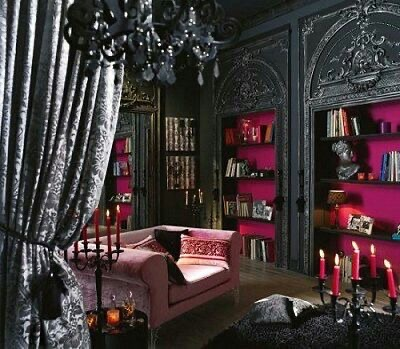
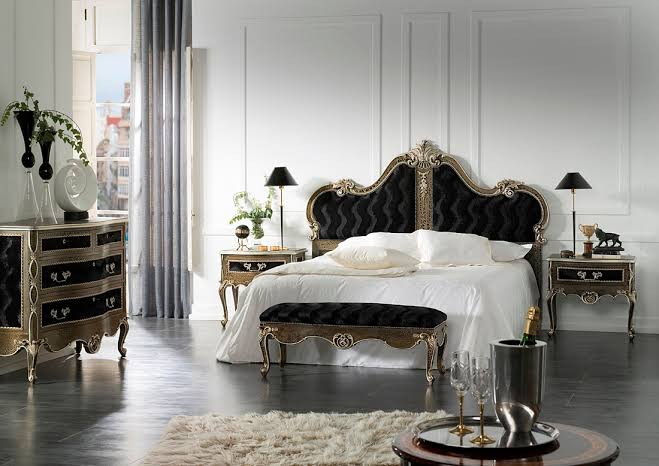
MagicWardrobes


Gothic Home Decoration
Decorating is an integral part of making your house feel like a home. For such an important process, you want to be thinking of the different styles and approaches you can take to give your home a cohesive look. One often underrated style is gothic—a style that can make any home feel like a different world. If you love stores like the Gothic Shop or your favorite author is Edgar Allan Poe, and you want to bring that love into decorating your home, read on to learn more about what features go into styling a gothic home.
What is “Gothic”?
Deep, dark, dramatic, luxurious. These words may be the first that come to mind when thinking of gothic home décor. Films such as Interview With a Vampire, Fall of the House of Usher, and Dracula embody the rich gothic visual style that many have come to know and love.
The original gothic style found its origins in 12th-century Europe and was a popular style seen on churches and cathedrals, among other things. Even as the century turned, elements of this artistic movement remained alive in eras that followed, fusing and evolving with the styles of periods such as the Victorian and Baroque era to create the vivid style that most people now envision when they hear the word “gothic.”
What Are Some Features of Gothic Home Decoration?
Gothic interior décor is comprised of various characteristics. Overall, it is known for its elaborate and dramatic imagery, with rich hues prominently featuring blacks and reds. In the modern day, gothic décor may often be seen as old-fashioned and antique, but what stands out about the gothic style is that each piece of furnishing is truly an art piece, evocative of a different time.
Elaborate furnishings
Taking from the original gothic architectural style, gothic home decoration often features furniture with intricate carvings and designs. Styling a gothic home is all about creating a sense of luxury.
For beds, this may mean grand four-poster bed frames, often further decorated with pointed spires. Other beds may feature oversized head- and footboards, and/or they may be baldaquin, or canopy, beds. Large pieces like this may often have art scenes carved into them, depicting imagery ranging from simple fleur-de-lis to religious scenes to gargoyle figures

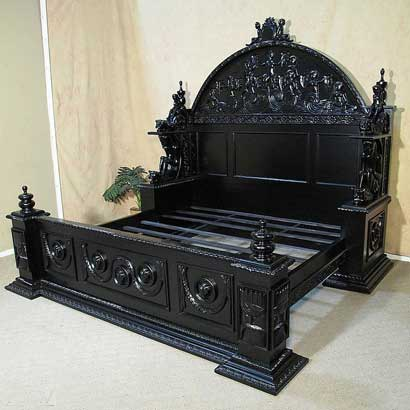
Other décor pieces in the gothic style will help to bring the room together. Furnishings such as a large gold or black gilded mirror, antique chandeliers with yellow-light bulbs (or better yet, real candles), tufted pillows, Victorian-era seating and tables, and other black baubles make for nice touches to a gothic-style room. Dark classical artwork within ornate gothic picture frames or simple black box picture frames will help liven up the perimeter of the room and make for eye-catching imagery. For bedrooms, if you are looking to really make a statement, adding an extremely unexpected piece, such as an antique piano or an oversized faux animal skin rug, can help make the room feel as though a 12th-century vampire lived and wrote poetry there.
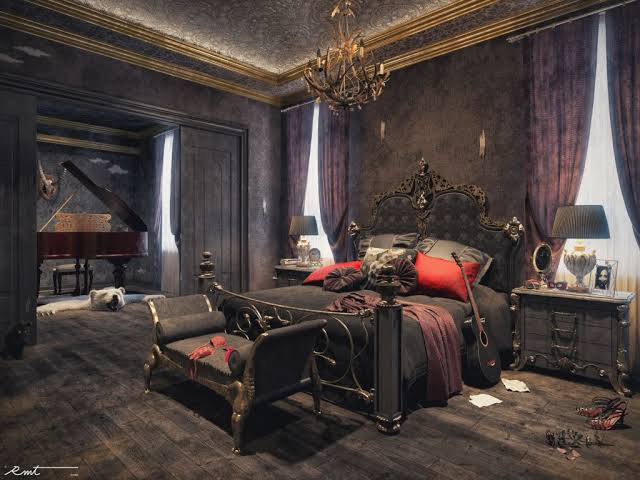
Of course, with such statement pieces, the owner of a modern gothic-style home may choose to balance the grandeur with more understated walls and flooring. You may choose to add moldings to ceilings to add a subtle of glamor. For the walls, painting them in a dark red or deep plum can add a simple but regal atmosphere that will tie any room together. And do not be afraid to venture into an even darker color, such as a charcoal or even jet black—the muted but unusual color will stand out without drawing attention away from your statement furniture. Wallpapers can also be a great option for adding more texture to the room, and they have the added benefit of being temporary, which allows you to switch up the look of your room at any moment.
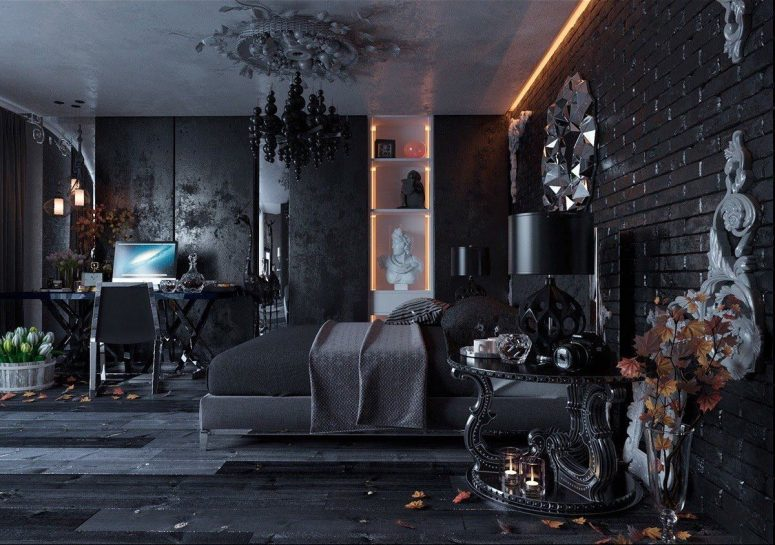
Fabrics
Just as important as furniture are the fabrics you choose to pair with them. When considering what fabrics to utilize in your space, remember that the gothic style typically utilizes darker, richer textures and colors.
A feature of fabric use present in gothic décor, which may not be present in other style,s is a gratuitous use of curtains and drapes. While many homes use drapes simply as a means of covering windows, a gothic-style home may see drapes as another way to add a luxurious feel to a room. Extra-long drapes that are made of silk or velvet are particularly suited to gothic rooms, and you may choose to use drapes not just over your windows, but behind your headboard or simply along a wall as decorative pieces to add dimension to the room.
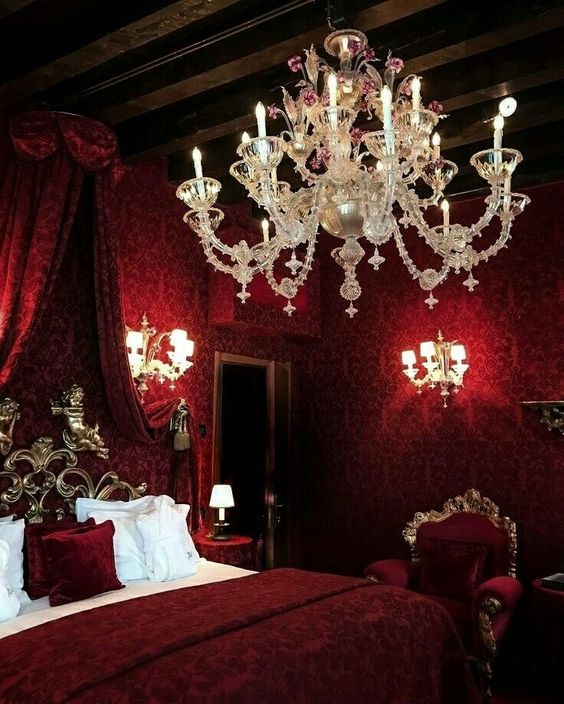
Gothic bedding will also often make use of silks and velvets, and patterns such as damask or floral silhouettes are good options. For more dramatic choices, skull patterns and faux fur also tie in nicely to a gothic style. Of course, simple un-patterned sheets can also look particularly regal depending on the quality and color.
Lighting
The key to making the lighting in a room fit the gothic theme is to focus on yellow, rather than white, lights. Further, lighting should remain soft, moody, and warm; lighting that is too bright may be a glaring contrast to dark walls and furnishings.
What Color Scheme Works With Gothic Styles?
As discussed previously, gothic-style rooms typically work with deep, rich colors—usually black, gold, reds like crimson and burgundy, and purples like plum and indigo. However, to bring a touch of modernity to a gothic room, you may choose to add sprinkles of more unexpected colors, such as olive green, mustard yellow, or even fuchsia. Even paler colors like powder blue and light grays on walls and/or accent pieces can be utilized to balance out the darkness of other elements in the room.
Gothic home decoration is no stranger to mixing and matching colors, so don’t be afraid play with a unique color scheme.